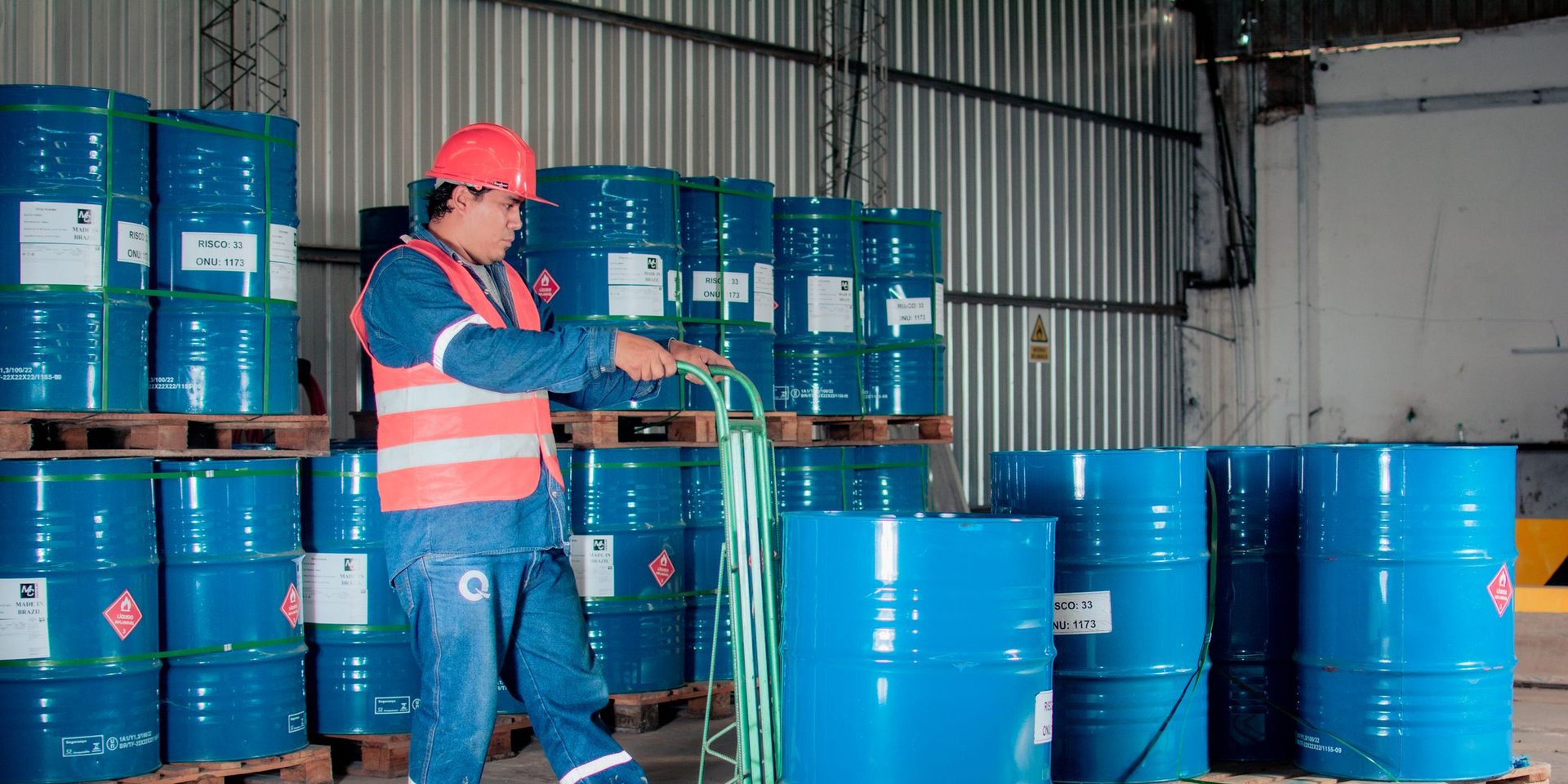
Many businesses store hazardous materials without thinking of themselves as a "hazardous materials" facility. Cleaning chemicals, flammable liquids, compressed gases, aerosols, and corrosives show up in shops, labs, warehouses, and light industrial spaces every day. Under the California Fire Code, the question is usually not whether you have these materials, but how much you have and where it is kept.
Understanding Maximum Allowable Quantities
A Maximum Allowable Quantity, or MAQ, is the amount of a given hazardous material that can typically be stored or used in a space without the building being classified as a high-hazard (Group H) occupancy. MAQs vary by hazard category, such as flammable liquids by class, oxidizers, toxics, and corrosives, and by whether the material is in storage or in use, and whether it is in a closed or open system.
The limits are generally applied per control area, not per building. That distinction is where most of the practical planning happens.
How Control Areas Increase Capacity
A control area is a space within which hazardous materials can be kept up to the MAQs. It can be an entire building, a portion of a building, a single floor, or even just one room, as long as it is separated from other control areas by fire barriers and/or rated floor assemblies, and the number of control areas allowed on each floor stays within the code limit. In simple terms, each control area gets its own allowance. A building with more than one properly separated control area can often hold more material overall while staying out of an H occupancy.
There are limits to this approach. The number of control areas allowed per floor and the fire-resistance rating of the separations are restricted, and the allowable percentage of the MAQ drops on upper floors and below grade; storage more than two levels below grade isn't allowed at all. Separations also need to be maintained over time; an unprotected wall penetration or a propped-open door can undermine the concept.
Common Triggers for a Hazardous Materials Review
We often see MAQ questions come up when:
- A new tenant moves into an existing space and brings a different operation or inventory.
- A business adds new chemicals, flammable liquids, or a new process.
- Storage is reorganized, consolidated into one room, or moved to a mezzanine or upper floor.
- A fire inspector or plan reviewer asks for a hazardous materials inventory during a permit or inspection.
The fire code official can require a Hazardous Materials Inventory Statement (HMIS), a Hazardous Materials Management Plan (HMMP), or both as part of a hazardous materials permit, and a permit is required once quantities exceed the amounts in the Fire Code's permit table. In California, businesses may also need to report hazardous materials to their local CUPA through a Hazardous Materials Business Plan; check with your local agency.
In many cases, the first step is simply building an accurate inventory by hazard category and location, then comparing it to the allowable quantities for each control area.
Exceeding the MAQ: Group H Implications and Alternatives
If quantities in a control area exceed the MAQs, that area is generally classified as a high-hazard (Group H) occupancy. H occupancies carry significantly more requirements, which can include separation, ventilation, spill control, secondary containment, explosion control, sprinklers, standby or emergency power, and alarms or monitoring, depending on the materials involved. For an existing building or tenant space, that can be a major cost.
Before going down that path, there are several options that are often worth evaluating:
- Reduce or redistribute quantities. Keeping only what is needed on site, or moving inventory to another location, is often the simplest fix.
- Add control areas. Where the building allows it, adding rated separations can create additional control areas.
- Use approved storage cabinets. Approved storage cabinets, gas cabinets, exhausted enclosures, or listed safety cans can, for many materials, double the allowable quantity.
- Sprinkler protection. For many materials, the allowable quantity also doubles in buildings fully protected by an automatic sprinkler system meeting NFPA 13. Where both increases apply, they stack, so qualifying materials can reach up to four times the base amount.
The right answer depends on the materials, the building, and how the operation actually runs day to day.
Quantities and control areas are far easier to plan than to fix. Building a realistic inventory before signing a lease or starting a tenant improvement lets you choose the right space, lay out control areas sensibly, and decide early whether cabinets or sprinklers are worth the investment. Treated as part of the planning process rather than an inspection response, hazardous materials rarely have to drive the project.
Not sure where your space stands?
Whether you're moving into a new space, bringing in new materials, or responding to an inspector, we can help you figure out what's allowed and what makes sense. Get in touch.